
arXiv:2608.269472026
4DSynth Controllable Procedural World Synthesis for Dynamic Embodied Simulation
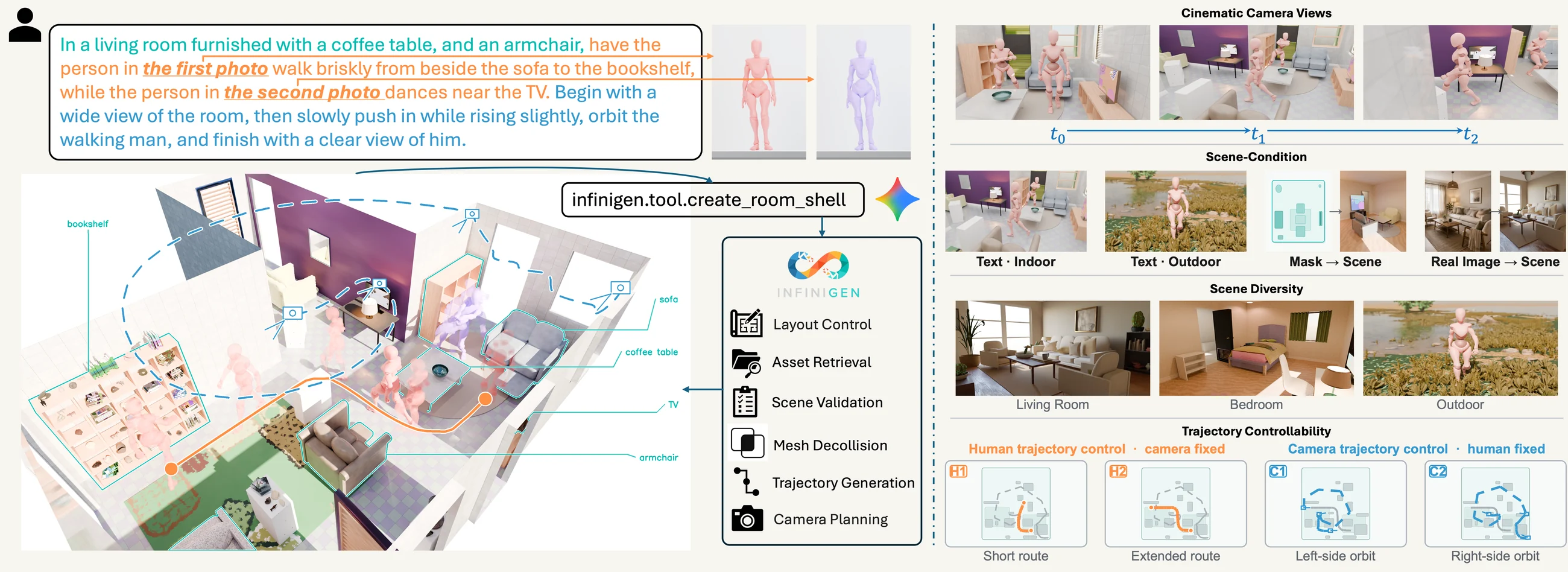
Language, a blueprint mask, or a single photograph becomes an editable dynamic 3D environment: a procedural scene with planned actors and a validated camera, exported to OpenUSD for physics simulation and embodied evaluation.
Abstract
4DSynth is a procedural authoring system that converts language descriptions, blueprint masks, or a single RGB image into editable dynamic 3D environments. Four scene-realization routes, native indoor and outdoor generation, layout-conditioned synthesis, and single-image real-to-sim, share a Stage representation of final geometry, walkability, and scene content. Against this common geometry the system measures animated character assets, plans collision-aware actor tracks, validates camera motion, and exports an OpenUSD stage for physics simulation, so scene structure, motion, and physical annotations stay explicit and editable rather than purely visual. Downstream, 4DSynth-Nav turns 122 generated physics-enabled scenes into 333 validated tasks with animated human obstacles, on which Qwen3-VL-30B-A3B-Thinking reaches 13.2% success and 22.4% subtask progress, exposing failures in blind-start exploration, multi-stage goal pursuit, and collision avoidance.
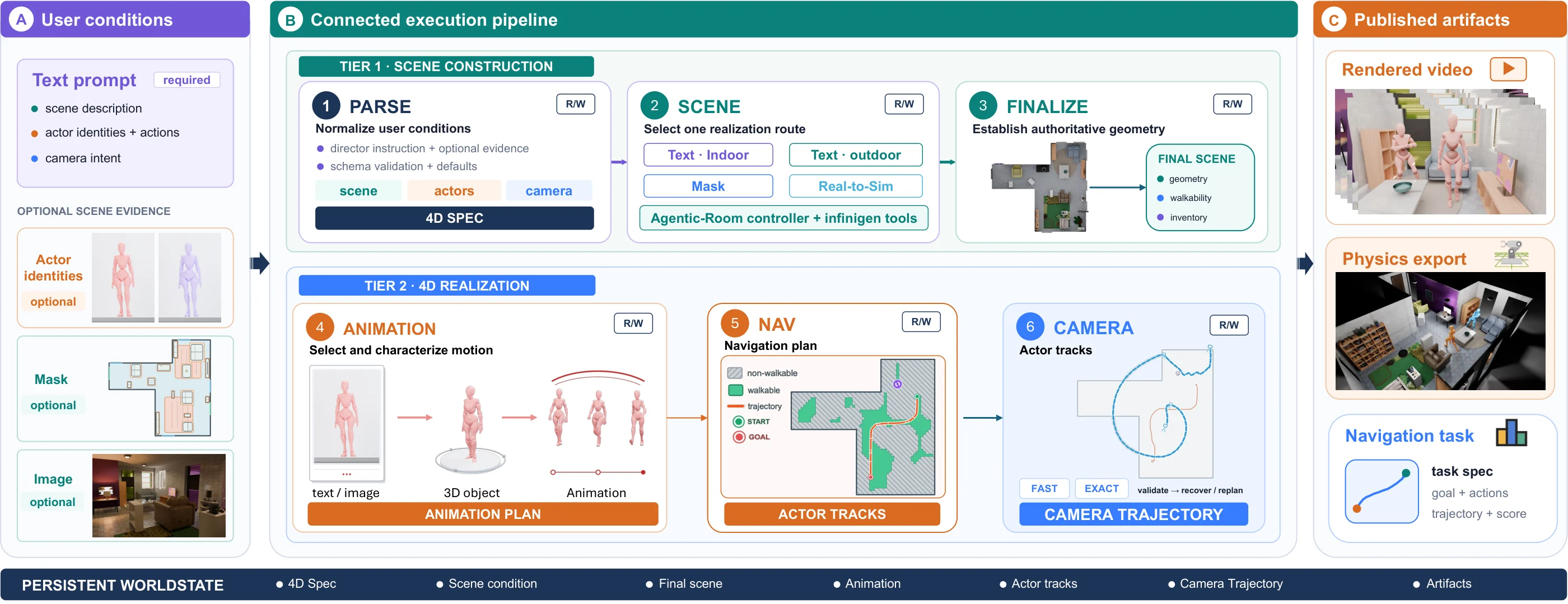
- Parse director instruction to a schema-validated 4D spec
- Scene native indoor or outdoor generation, or a text/mask or real-to-sim compiler
- Finalize the Stage: geometry, walkability, inventory
- Animation motion clips selected, each character measured
- Nav A* on the walkable set eroded by each actor’s radius
- Camera intent primitives validated for feasibility and visibility
Results
Four ways in, one editable 4D world
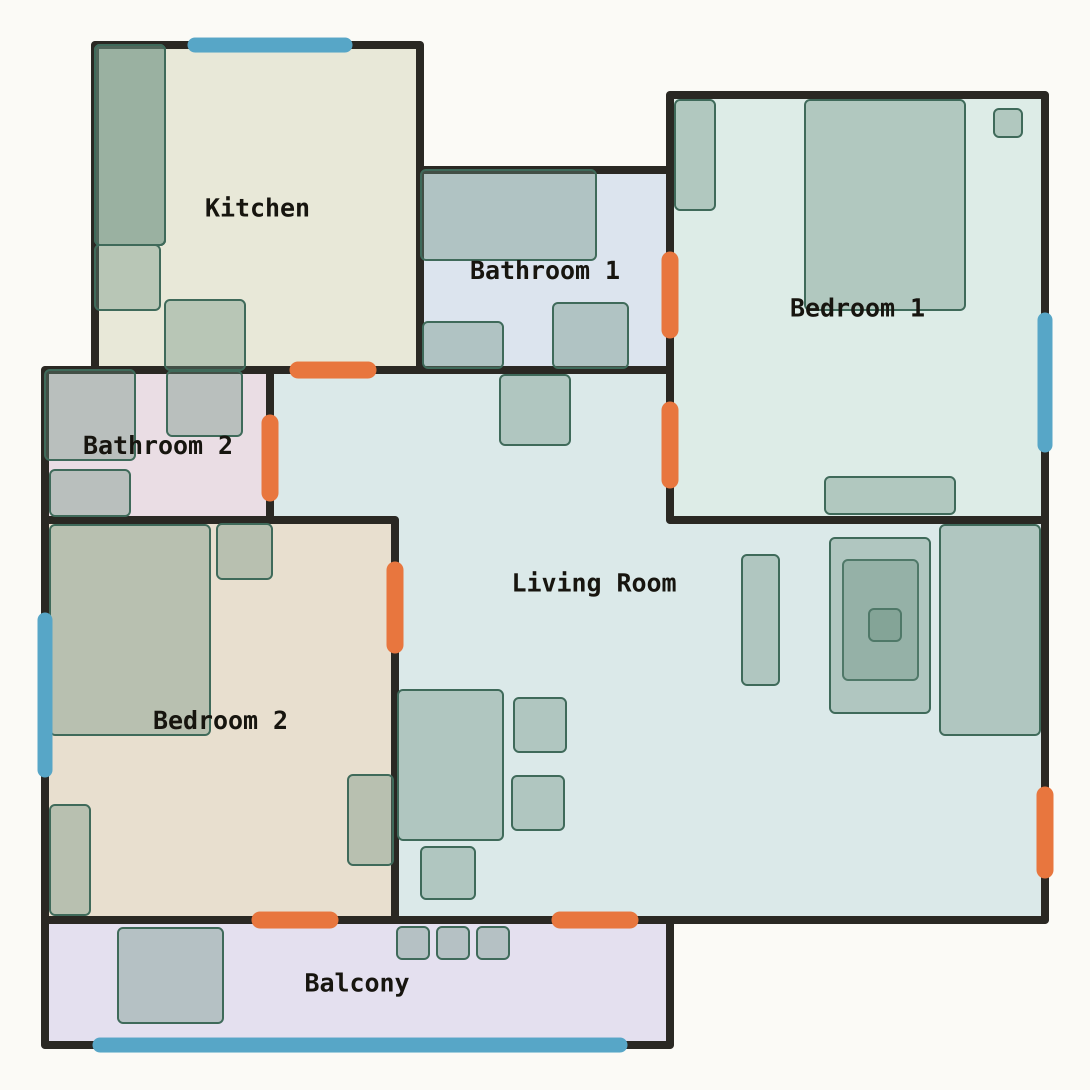
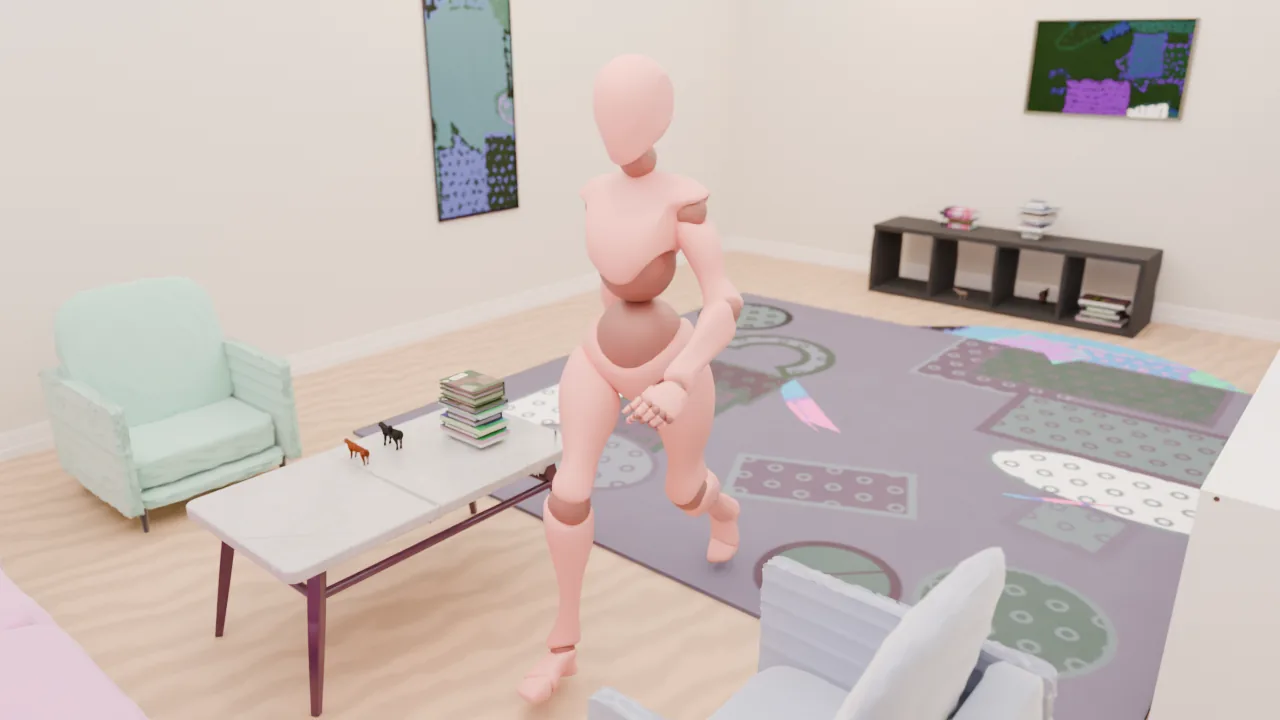
Each panel shows the input to one route and its generated result. All four routes share the same editable scene representation, on which actors and cameras are planned over time.
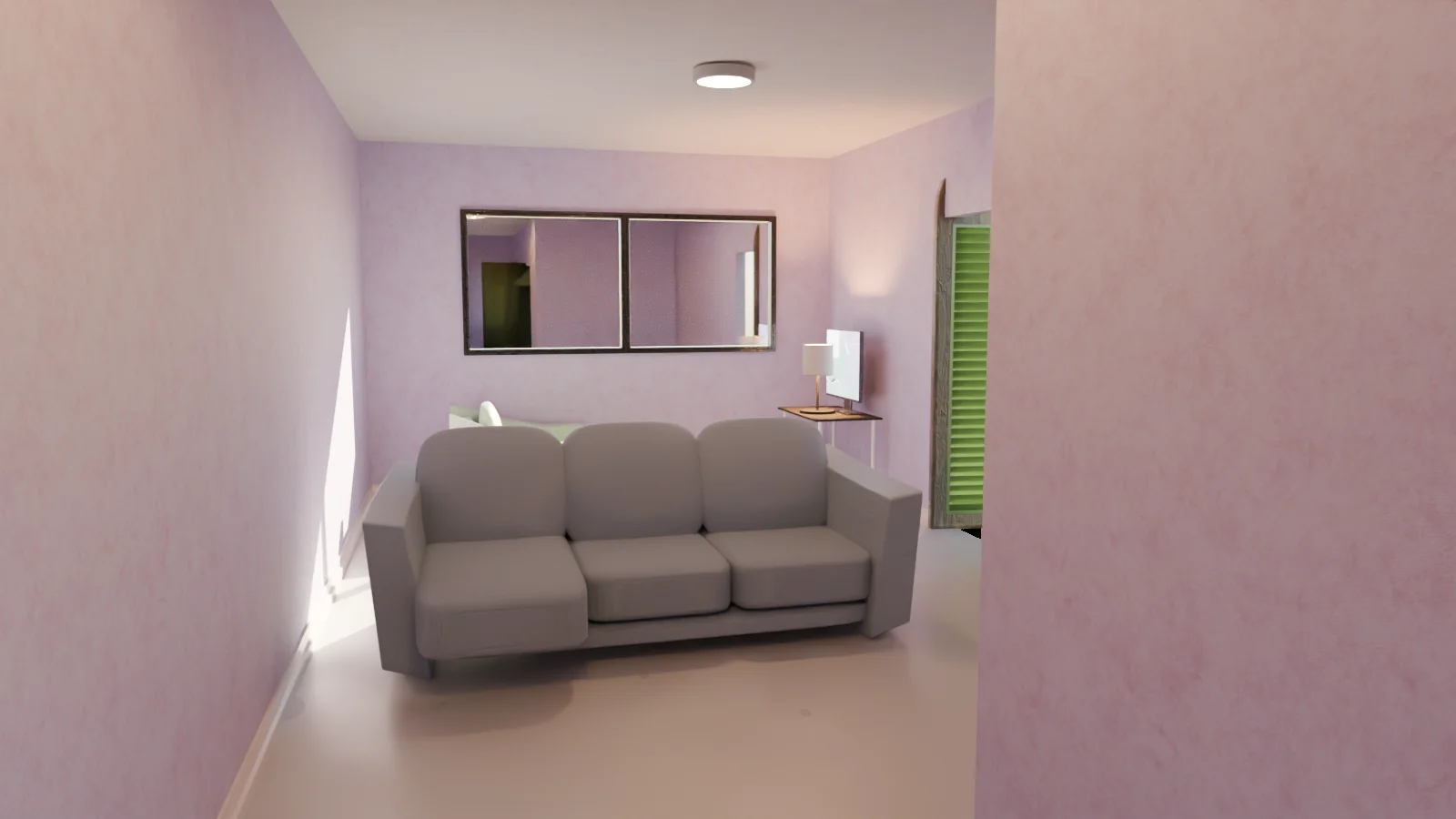
Input · instruction
“In a living room furnished with a coffee table, an armchair, a sofa, and a bookshelf, the first person walks from beside the sofa to the bookshelf while the second person dances. Use a wide tracking shot that follows the first person…”
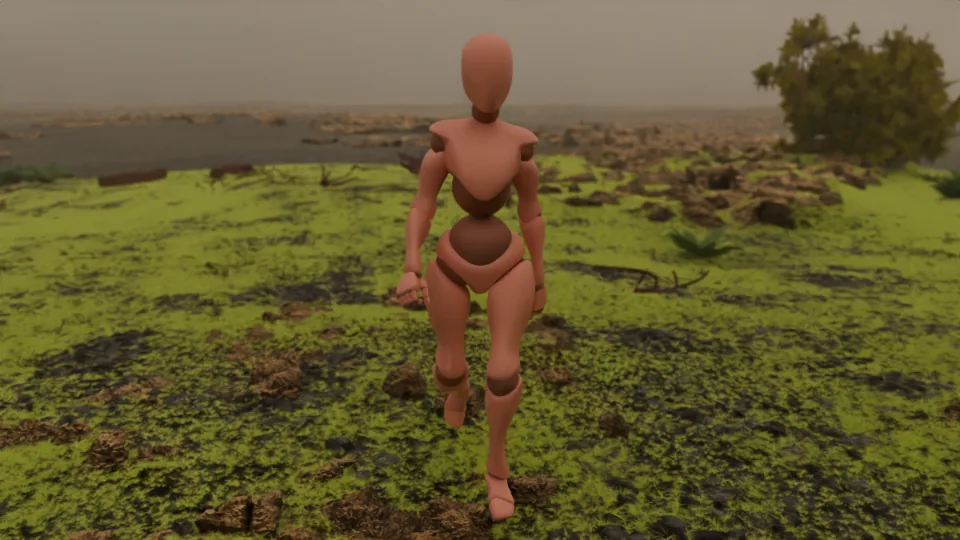
Input · instruction
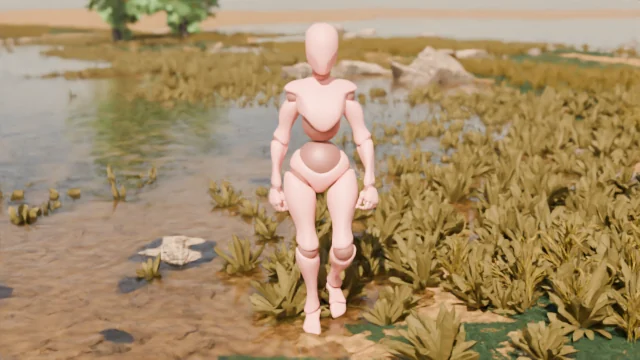
“Create an open meadow with scattered trees. One person walks across the meadow. Use a wide trailing camera that follows the person and keeps the surrounding terrain visible.”
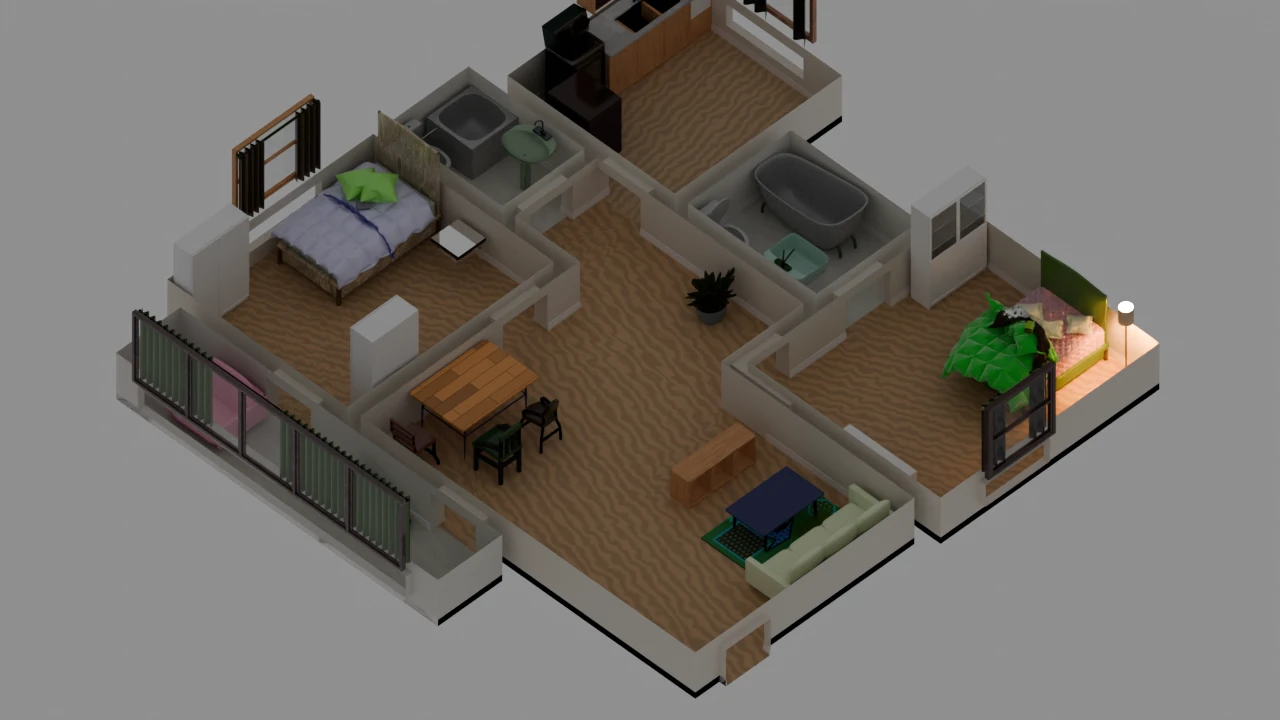
Input · annotated mask
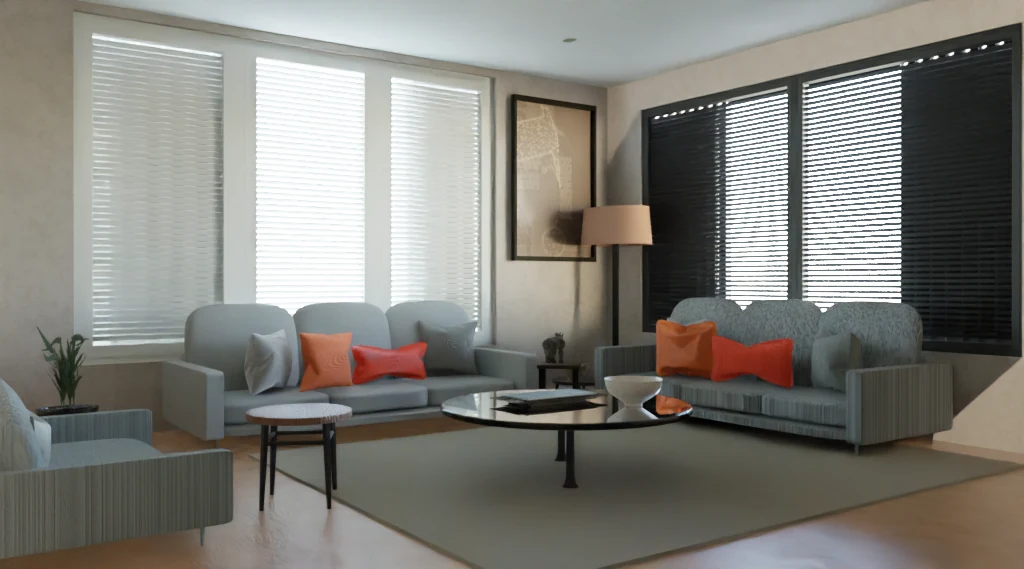
Input · one photograph

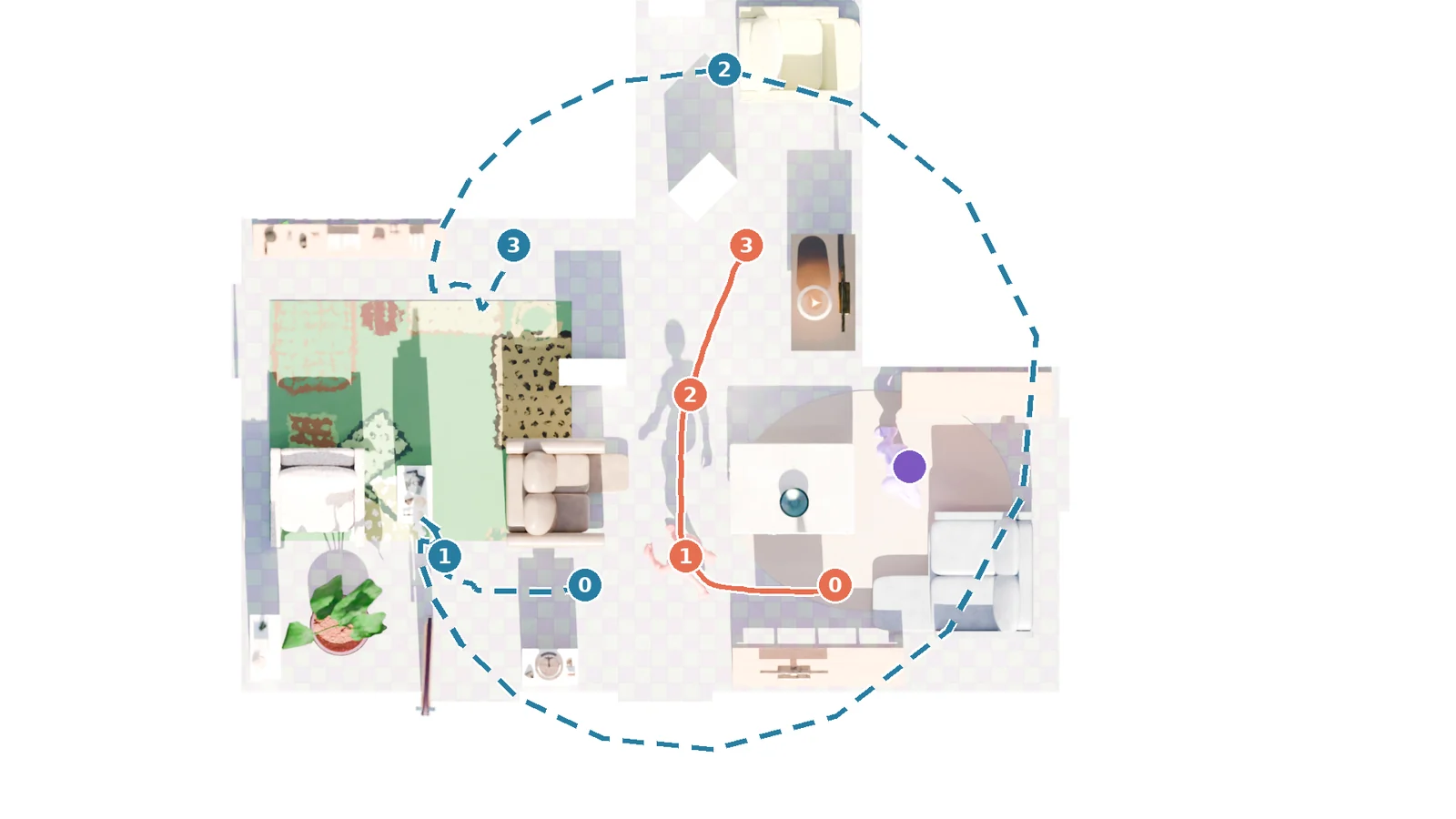
Synchronized 4D state · text/mask route actor + camera over time
walkable furniture actor root camera
t 0.00 s · actor and camera synchronized
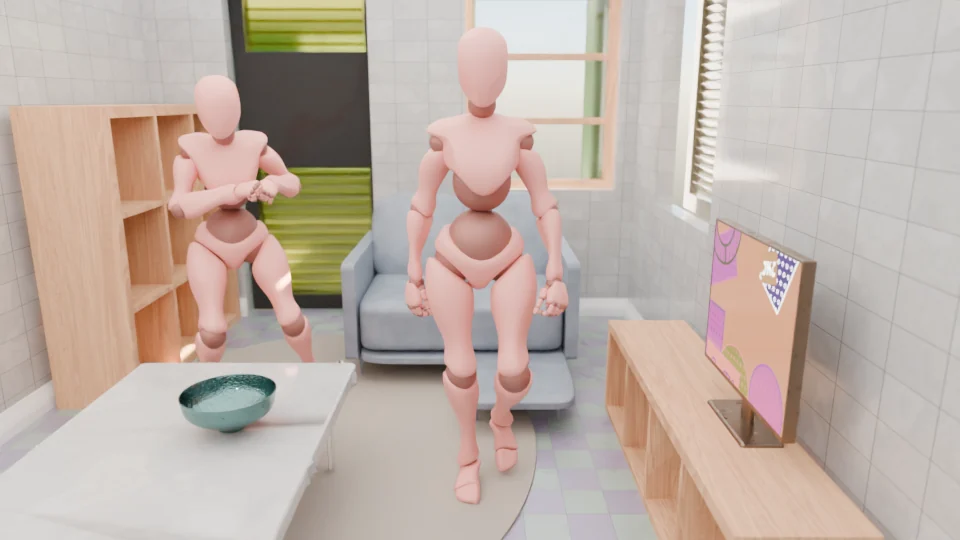
4D, not static 3D. The rendered sequence and its scene state share one timeline:
One person walks through the living room. Use a wide tracking camera that follows the person and keeps the room layout visible.
The map visualizes walkable space, scene objects, actor motion, and camera motion. Drag the
map or filmstrip to inspect any moment.
 Indoor · overhead
 t0
t0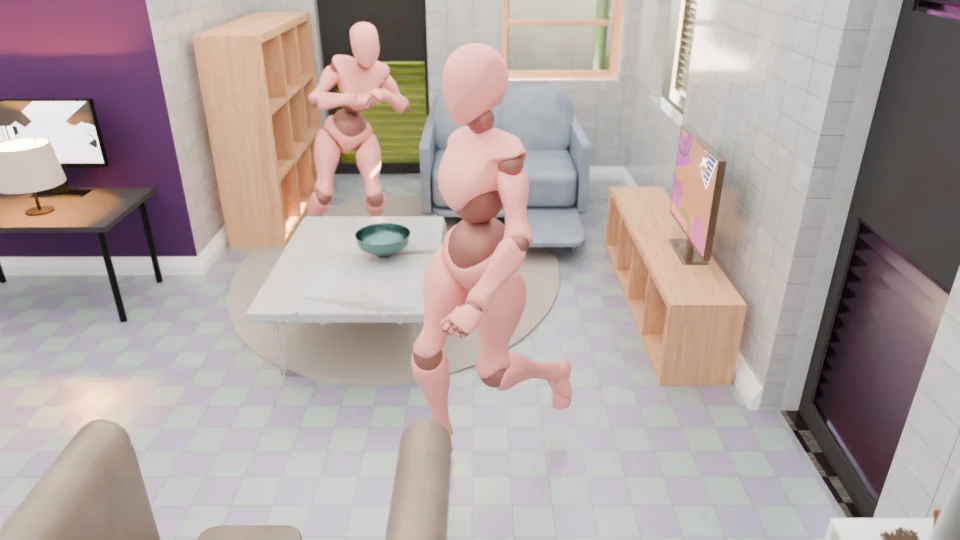 t1
t1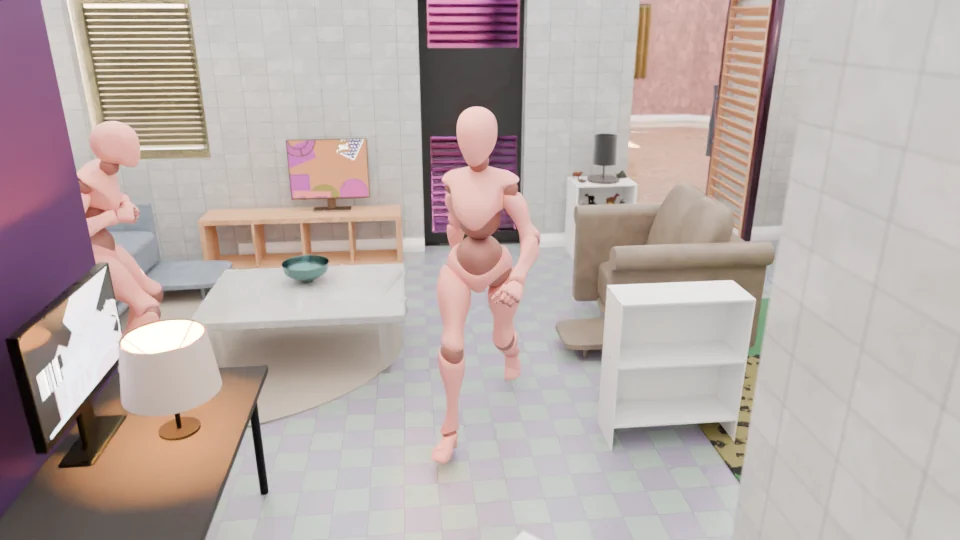 t2
t2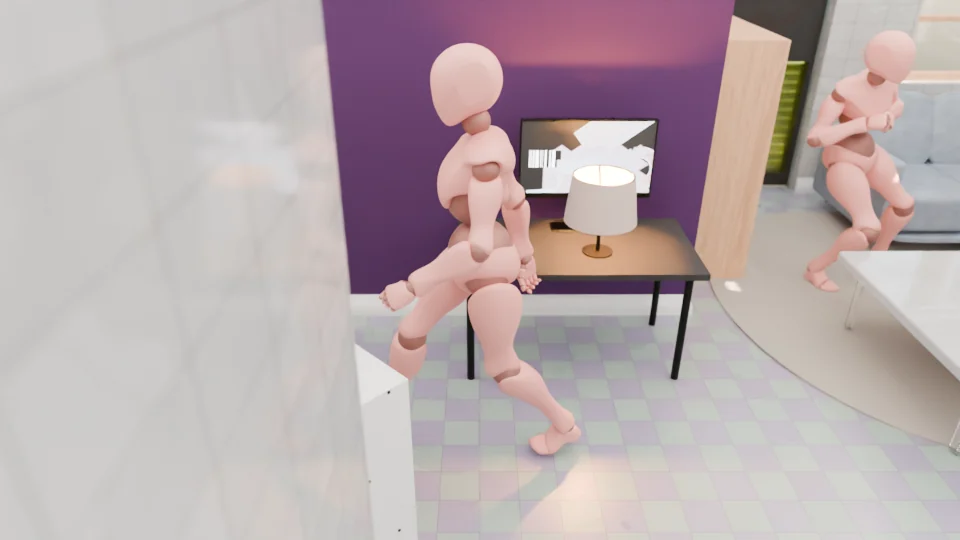 t3
t3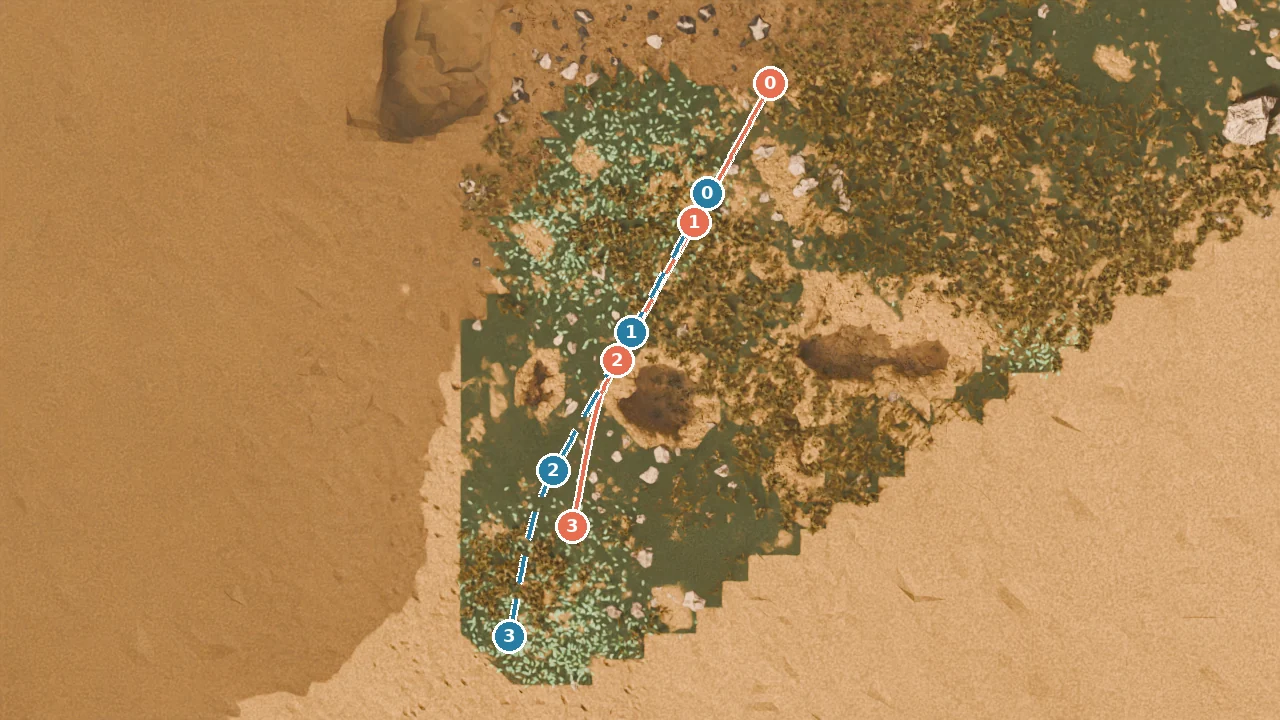 Outdoor · overhead
 t0
t0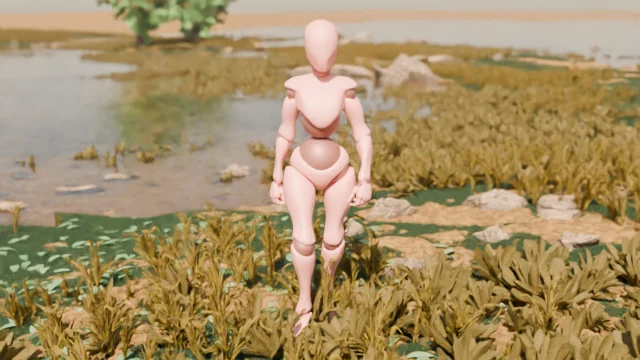 t1
t1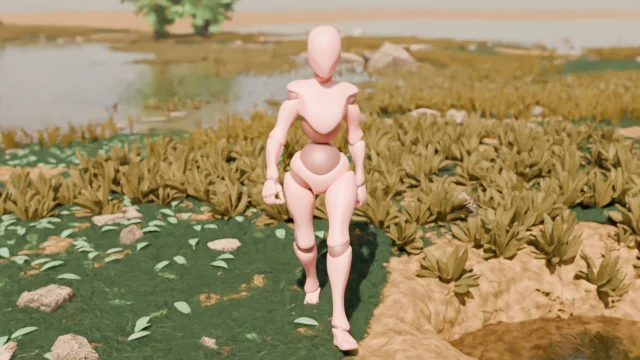 t2
t2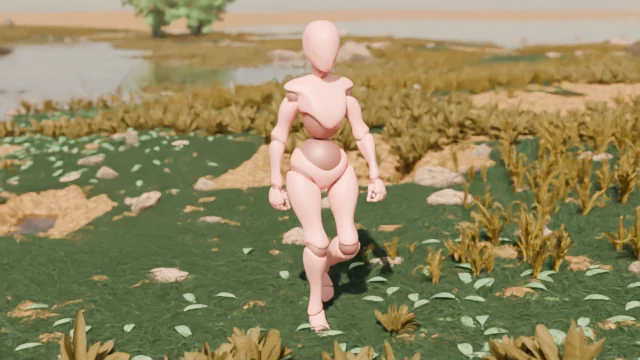 t3
t3Executable world
Explicit geometry you can drive, exported to OpenUSD
Explore a generated multi-room scene directly in the browser while an animated pedestrian follows its planned route. Alongside it, the pipeline’s OpenUSD exports are shown in NVIDIA Isaac Sim with geometry, materials, character motion, and physical scene structure preserved.
Manual control · animated 4D browser preview ready
Control a Carter robot through the generated apartment while an animated pedestrian follows a collision-aware route. Movement respects the exported scene geometry, and the live map shows the rooms, both agents, and the route you have travelled.
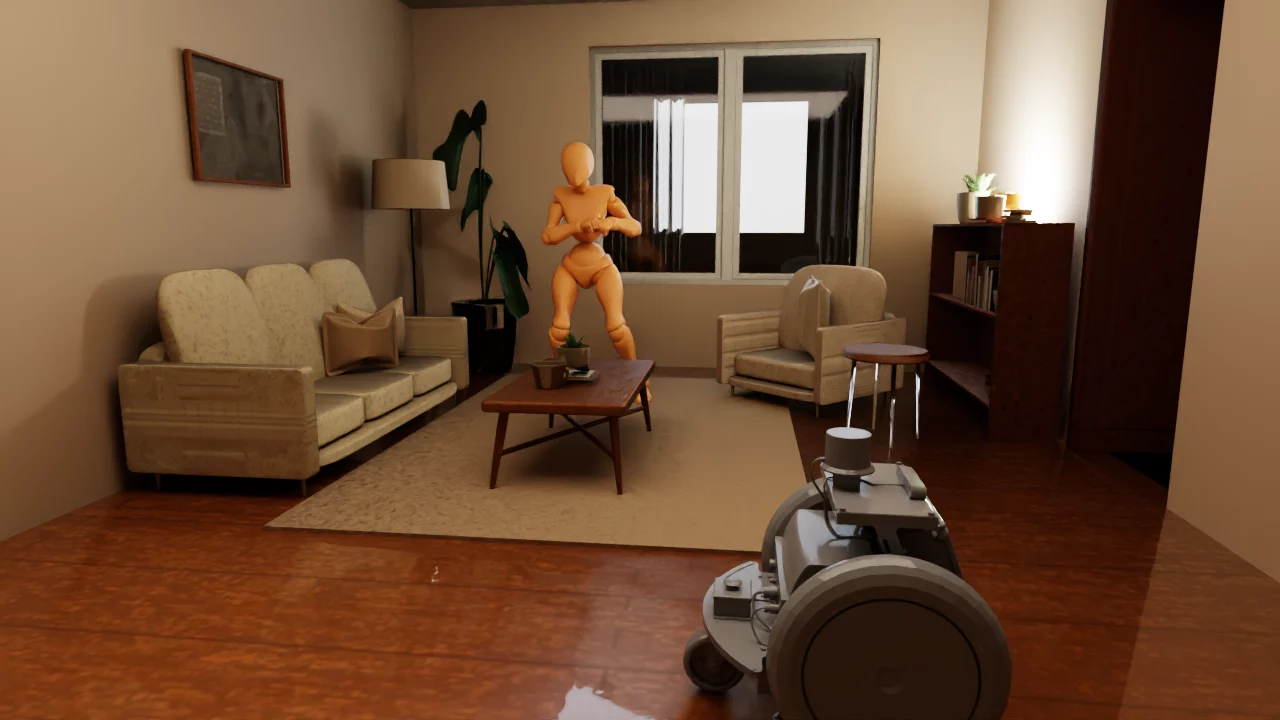
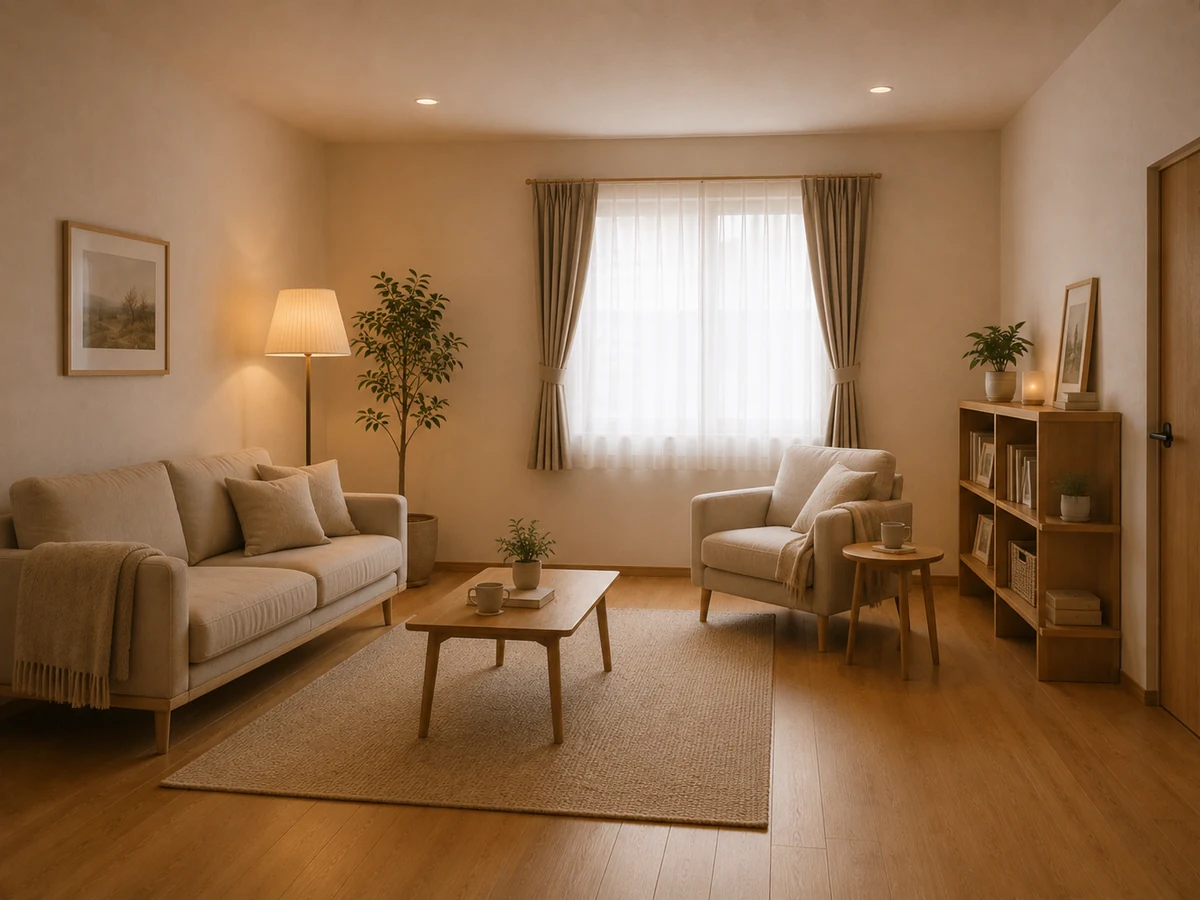 Animated PhysX replay. Carter navigates a real-to-sim room while a USD-Skel
character remains animated with physical collision geometry in Isaac Sim. The scene is
compiled from this one photograph.
Animated PhysX replay. Carter navigates a real-to-sim room while a USD-Skel
character remains animated with physical collision geometry in Isaac Sim. The scene is
compiled from this one photograph.
4DSynth-Nav
World generation becomes task generation
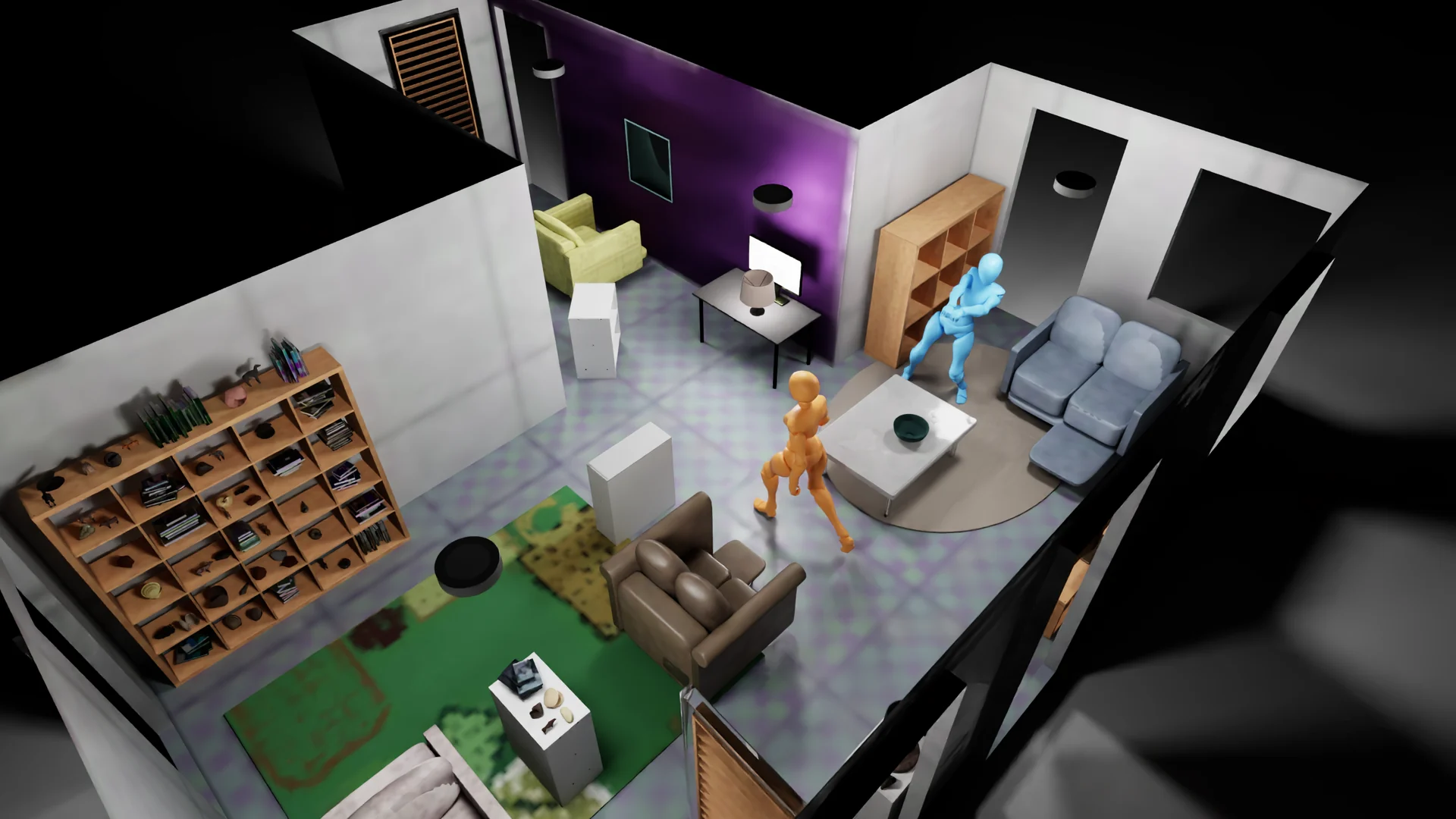
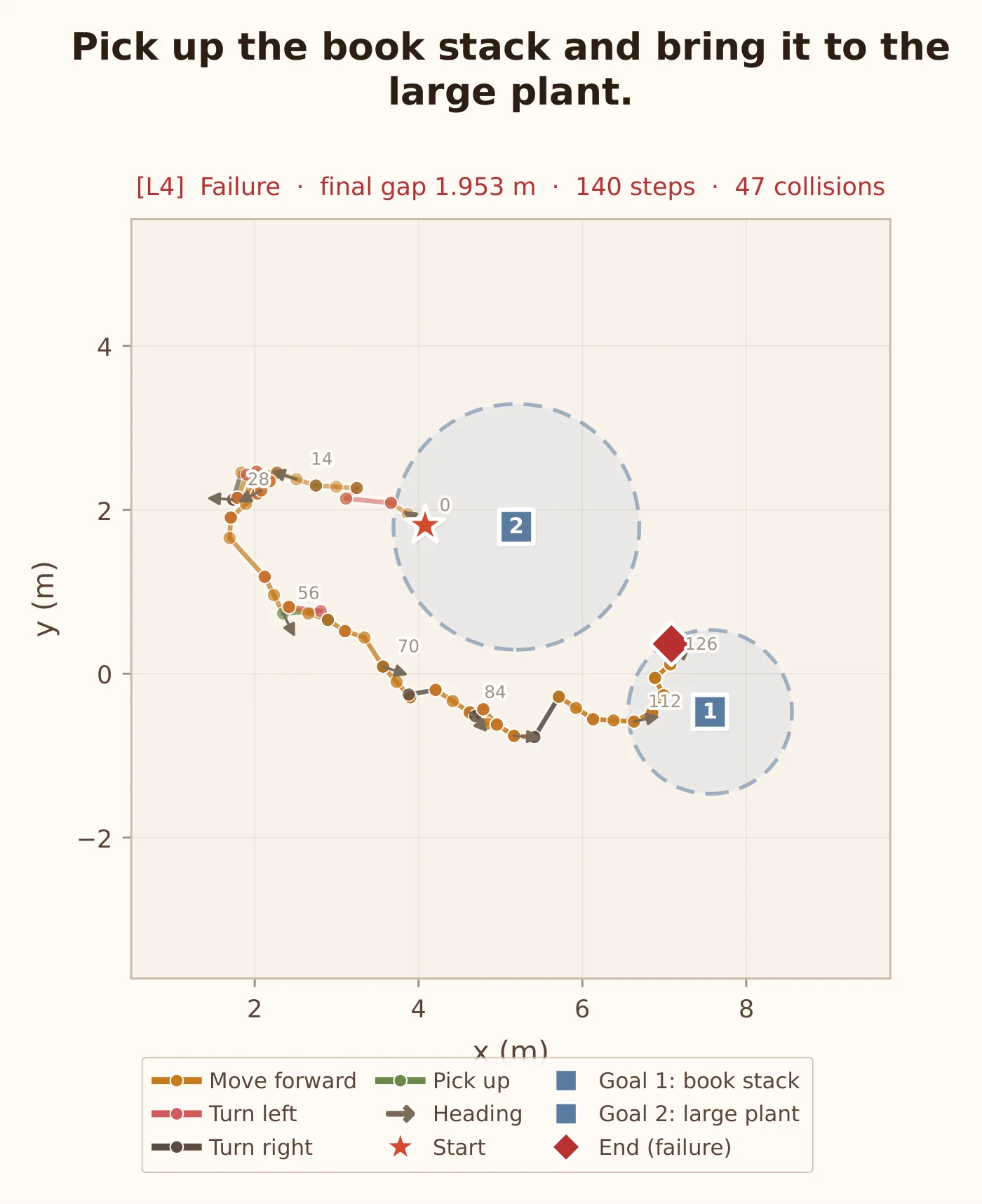
Navigation and pick-and-place tasks are instantiated automatically from 122 physics-enabled indoor scenes generated by the pipeline and rendered in Isaac Sim 4.5, each with animated characters as dynamic obstacles that do not react to the agent; 333 of 345 candidates pass every physical gate. Tiers: L2, one target starting out of view; L3, two phases with the first target visible; L4, both.
- 122
- generated physics-enabled scenes
- 333
- validated tasks across 113 scenes
- 13.2%
- success, Qwen3-VL-30B-A3B-Thinking
- 33.3%
- success, Gemini 3.1 Pro
Success rate (SR) by tier; overall SR, subtask progress (SP), final goal distance (GD), and recorded contacts per episode on all 333 tasks.
| Model | L2 SR | L3 SR | L4 SR | All SR | All SP | GD (m) | Coll. |
|---|---|---|---|---|---|---|---|
| Qwen3-VL-30B-A3B-Thinking | 16.8 | 18.2 | 4.5 | 13.2 | 22.4 | 4.27 | 39.2 |
| Gemini 3.1 Pro | 57.5 | 23.6 | 18.2 | 33.3 | 40.7 | 2.68 | 19.0 |
Blind-start exploration (L2) produces the largest gap. Partial progress without completion and frequent contacts reveal persistent weaknesses in multi-stage behavior and collision avoidance.
Paper
4DSynth: Controllable Procedural World Synthesis for Dynamic Embodied Simulation
arXiv:2608.26947, 2026.
Scene generation builds on Infinigen and Infinigen Indoors; single-image perception uses Depth Anything 3, SAM 3, and SAM 3D; simulation and benchmark rendering use NVIDIA Isaac Sim 4.5. Source code is released under the BSD 3-Clause License; third-party dependencies and user-supplied runtime assets remain governed by their own terms.
@misc{4dsynth2026,
  title         = {4DSynth: Controllable Procedural World Synthesis
                   for Dynamic Embodied Simulation},
  year          = {2026},
  eprint        = {2608.26947},
  archivePrefix = {arXiv},
  url           = {https://arxiv.org/abs/2608.26947}
}